DonateMembershipVisit Heritage
  • Tūrangawaewae
    Places
  • Tira Māori
    Māori Heritage
  • Poutairangahia
    Archaeology
  • Rauemi
    Resources
  • Mō Tātou
    About Us
  • New Zealand Heritage List
  • Nominate and submit
  • Explore the List
  • National Historic Landmarks
  • Plaques
  • Rainbow List Project
  • Lost heritage
  • Visit Heritage
  • Our properties
  • Turnbull House Project
  • Collections
  • Shop
  • Tohu Whenua
  • Tira Māori
  • Conserving Māori heritage
  • Marae built heritage
  • Māori heritage on the List
  • Hinemihi—Te Hokinga Mai
  • What is archaeology?
  • Is there a site on my property?
  • What are my legal requirements?
  • Affecting an archaeological site
  • Declaring an archaeological site
  • Archaeology FAQs
  • Archaeology Digital Library
  • Archaeology guidelines and templates
  • Resources
  • Funding
  • Publications
  • Sustainable management guides
  • Disaster recovery
  • Podcasts & digital resources
  • Education Hub
  • Conservation plans
  • About
  • Board
  • Māori Heritage Council
  • Senior Staff
  • Offices
  • Contact us
  • Careers
  • Covenants
  • Fast-track
  • Corporate documents
  • Currently consulting on
  • Our submissions
  • News
  • Covid-19 response
Quick links
Rārangi Kōrero | The List
Explore the List
National Historic Landmarks
Ngā Manawhenua o Aotearoa me ōna Kōrero Tūturu
Quick links
Tapuwae
A Vision for Places of Māori Heritage
Funding for Māori Heritage
Resources
Quick links
Archaeological Authority Portal
Applying for an archaeological authority
Archaeology FAQs
Browse the most frequently asked questions about archaeological authorities and the archaeological process.
Quick links
Quick links
News
News Keep up to date with Heritage New Zealand Pouhere Taonga
Membership
Membership Find out more and sign up today
DonateMembershipVisit Heritage
  • Tūrangawaewae
    Places
  • Tira Māori
    Māori Heritage
  • Poutairangahia
    Archaeology
  • Rauemi
    Resources
  • Mō Tātou
    About Us
  • New Zealand Heritage List
  • Nominate and submit
  • Explore the List
  • National Historic Landmarks
  • Plaques
  • Rainbow List Project
  • Lost heritage
  • Visit Heritage
  • Our properties
  • Turnbull House Project
  • Collections
  • Shop
  • Tohu Whenua
  • Tira Māori
  • Conserving Māori heritage
  • Marae built heritage
  • Māori heritage on the List
  • Hinemihi—Te Hokinga Mai
  • What is archaeology?
  • Is there a site on my property?
  • What are my legal requirements?
  • Affecting an archaeological site
  • Declaring an archaeological site
  • Archaeology FAQs
  • Archaeology Digital Library
  • Archaeology guidelines and templates
  • Resources
  • Funding
  • Publications
  • Sustainable management guides
  • Disaster recovery
  • Podcasts & digital resources
  • Education Hub
  • Conservation plans
  • About
  • Board
  • Māori Heritage Council
  • Senior Staff
  • Offices
  • Contact us
  • Careers
  • Covenants
  • Fast-track
  • Corporate documents
  • Currently consulting on
  • Our submissions
  • News
  • Covid-19 response
Quick links
Rārangi Kōrero | The List
Explore the List
National Historic Landmarks
Ngā Manawhenua o Aotearoa me ōna Kōrero Tūturu
Quick links
Tapuwae
A Vision for Places of Māori Heritage
Funding for Māori Heritage
Resources
Quick links
Archaeological Authority Portal
Applying for an archaeological authority
Archaeology FAQs
Browse the most frequently asked questions about archaeological authorities and the archaeological process.
Quick links
Quick links
News
News Keep up to date with Heritage New Zealand Pouhere Taonga
Membership
Membership Find out more and sign up today
  • Nominate and submit
  • National Historic Landmarks
  • Nominate and submit
  • National Historic Landmarks
  • Conserving Māori heritage
  • Marae built heritage
  • Conserving Māori heritage
  • Marae built heritage
  • Archaeological authorities
  • Archaeology Digital Library
  • Archaeological authorities
  • Archaeology Digital Library
  • All resources
  • Publications
  • Funding
  • All resources
  • Publications
  • Funding
  • FAQs
  • FAQs
Follow us on:
Places
  • Nominate and submit
  • National Historic Landmarks
Tira Māori
  • Conserving Māori heritage
  • Marae built heritage
Archaeology
  • Archaeological authorities
  • Archaeology Digital Library
Resources
  • All resources
  • Publications
  • Funding
FAQs
  • FAQs
Follow us on
HomePrivacyTerms and conditionsAbout this site
© Heritage New Zealand Pouhere Taonga 2026.
 
Springvale Suspension Bridge

Taihape-Napier Road, RANGITIKEI

Public

Historic Place Category 2

List No. 7535

Quick links:
List GalleryLocationDetails
Commissioned by the Rangitikei County Council in 1922, the Springvale Suspension Bridge, as it has became known locally, provided an essential and safe crossing of the flood-prone Rangitikei River. In a largely agricultural region this river is a valuable resource however it also represented a challenge to early settlers; early records show that a flood in 1897 destroyed all six bridges in existence at the time.

To cross this river is an essential and integral part of community life, both past and present. At one time it meant traversing the 'prehistoric ford', located directly below the suspension bridge. In 1903 a temporary suspension bridge was shifted from Kuripapango to a location near the site of the current suspension bridge, however for foot traffic only. The demand for a traffic bridge was high, as recorded in the Taihape Daily Times on the 9th of October, 1916, which expressed 'That bridge is now needed so urgently to complete road communication with the block of land given for Maori Settlement and the great Mangaohane block of land given for Maori'.

Maori movement in this area has a long history. The bridge crosses the Rangitikei River at the same spot as did generations of Maori trekking the 'Inland Patea' route. This route is an old Maori trail from the East Coast to the centre of the North Island. After another significant flood in 1958, one of the very few Moa hunting sites in the North Island was revealed not far upriver.

European history dates from the mid-nineteenth century when Reverend Richard Taylor and the missionary William Colenso both travelled the historic route, spreading their Christian beliefs. The first European sheep farm was established by Captain Azim Birch and his brother William when they bought the land between the Moawhango and Rangitikei Rivers in 1867. They named the area Erehwon, spelling 'nowhere' backwards. Later renamed Erewhon riding, this area went on to become a well-known example of the late nineteenth century post World War One settler programmes, in which large tracts of marginal land were opened up for development.

The erection of a traffic bridge was therefore vital to expanding agriculture in the Rangitikei district at this time. It was needed to facilitate easier access to the farms inland and for the movement of stock and wool to the port of Napier. It also would be valuable to the social life of the communities, providing a link to the rest of the country and thus opportunities to enjoy travel as a leisure pursuit. For the people in this area the bridge represented a chance to strengthen ties amongst communities and increase social networks.

The Springvale Suspension Bridge was designed by S.A.R. Mair (Sydney), the Engineer of the Rangitikei County Council from 1899 to 1947. Tenders were called for and by November 1923 one was accepted from William Salt, a bridge contractor from Wanganui. Salt went on to become a successful bridge designer; despite his short career he built many major river crossings in the Rangitikei, Wanganui and Waitotara regions. The Springvale Suspension Bridge was his major achievement, and may be the only bridge he built that is extant.

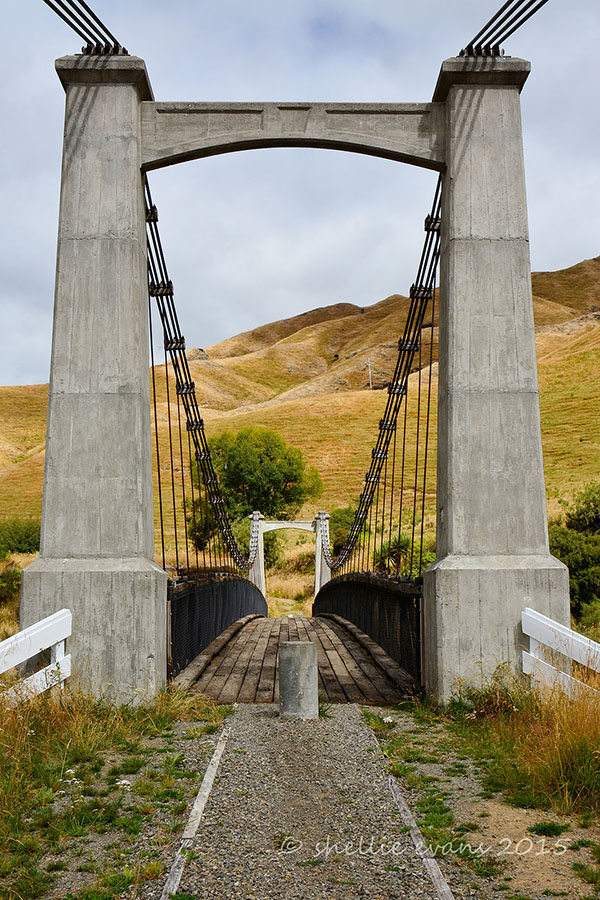
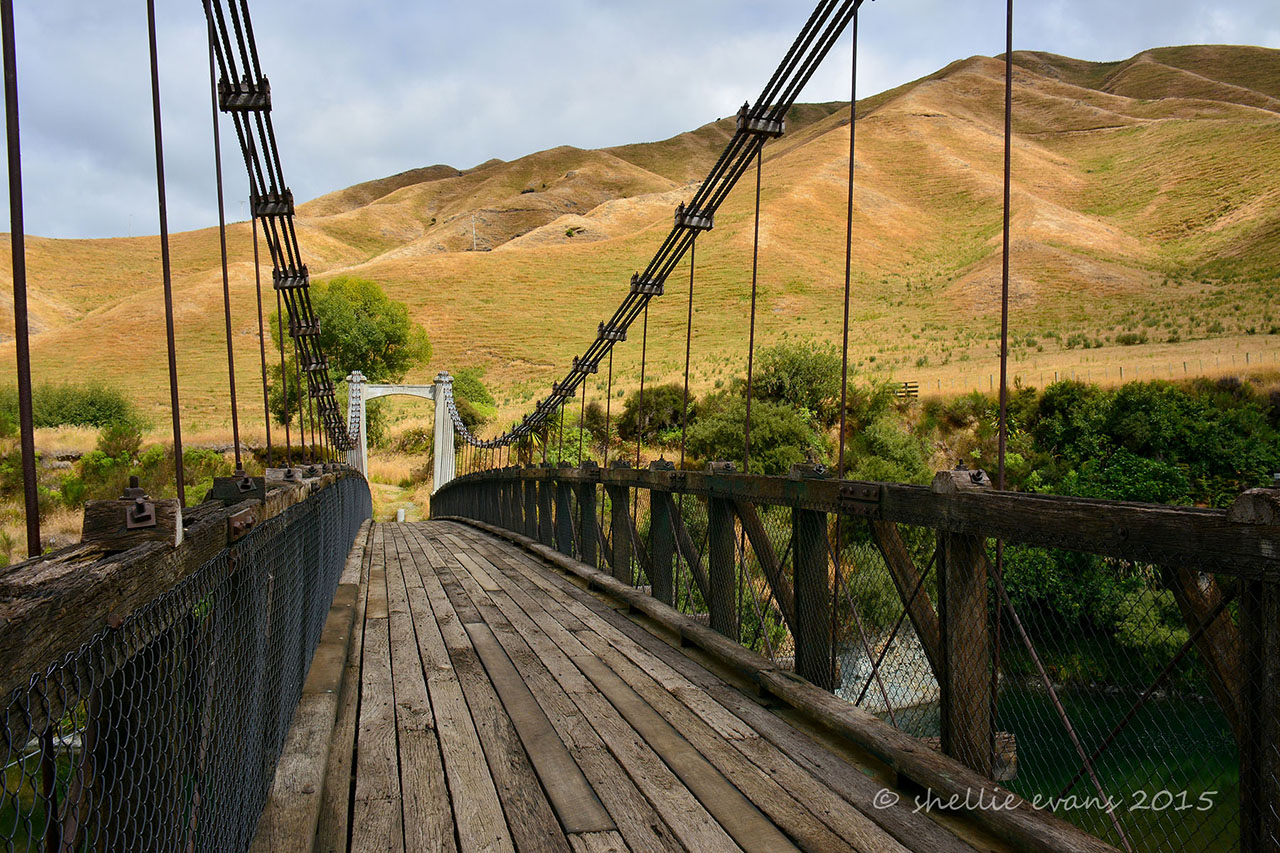
Construction was completed in early 1925, and cost £4473 13s 6d. The Erewhon Bridge, as it was then unofficially known, was opened in early April in time for the Easter holidays. A 61 metre long structure of reinforced concrete, steel and Australian Hardwood decking, it is visually inspiring and an impressive engineering achievement. The seven metre tapered concrete towers are anchored by large concrete blocks below ground level. The bridge utilises 140mm cables made of plough steel wire with a breaking load of 12 tonnes. Diagonal sway bracing can be seen from beneath the bridge, with sway cable anchoring the bridge to the banks.

Due to an increasing amount of vehicles using the bridge over a 45 year period, repairs were becoming more frequent and it became apparent that a new bridge would have to be built to accommodate the rising traffic numbers. Thus in 1970 the Callender-Hamilton Bridge was constructed less than 50 meters away. Threatened with demolition, R.A.L. Batley (Tony) of Moawhango advocated for the preservation of the bridge through his recommendation in 1974 that it be bought by the New Zealand Historic Places Trust.

The Springvale Suspension Bridge is registered as a Category II Historic Place in recognition of its historical and social value and its significant technological design. Once a common sight in New Zealand, today there are only a few of these bridges that remain in working order and have a viable future. Its presence is testament to the bridge's durability and lasting significance. It is an iconic achievement of engineering of the era, exhibiting the pioneering spirit of overcoming the challenges of the terrain and achieving the expansion of settlement into the 'Inland Patea' and indeed the interior of the country.
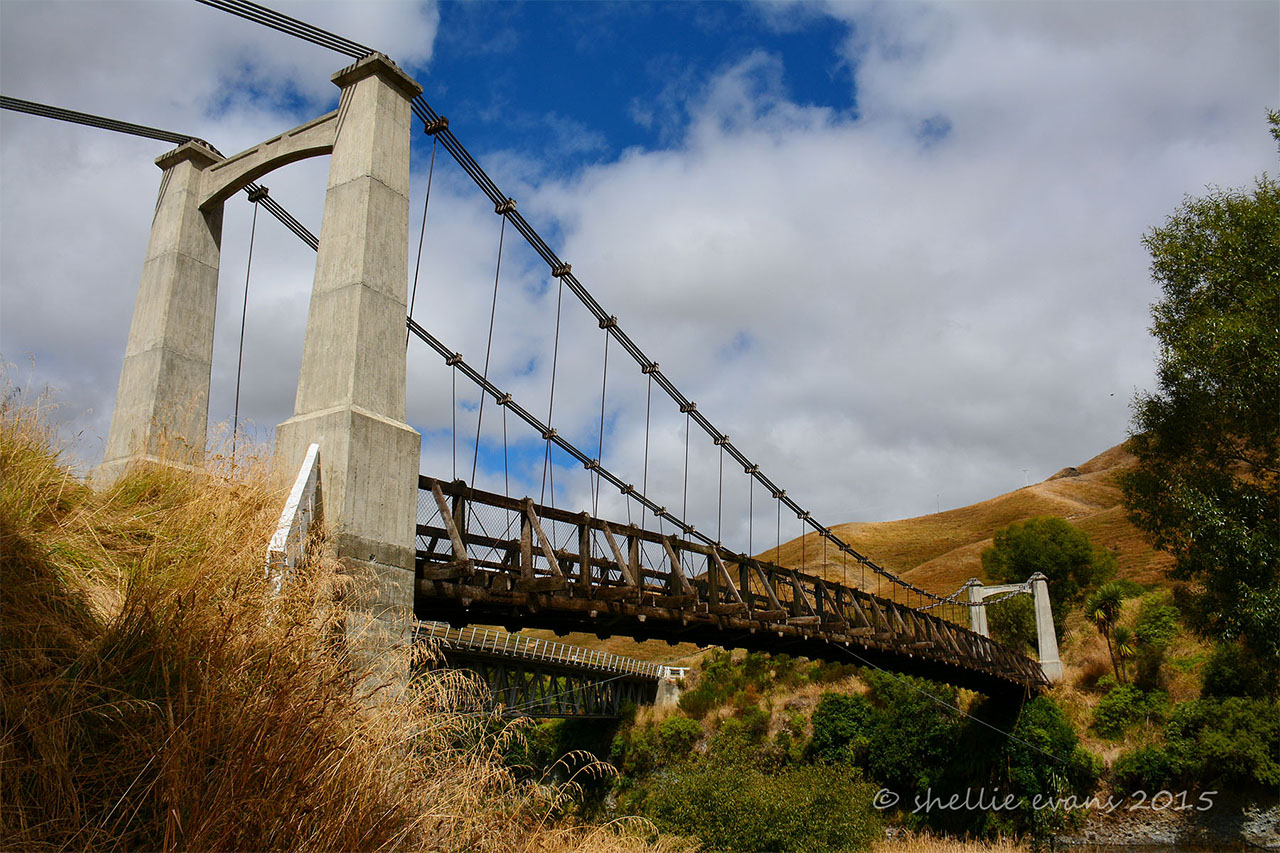
Springvale Suspension Bridge. CC BY-NC-ND 2.0 Image courtesy of www.flickr.com | Shellie Evans - flyingkiwigirl | 15/02/2015 | Shellie Evans

List Entry Information

Overview

Status
Listed

List Entry Status
Historic Place Category 2

Access
Able to Visit

List Number
7535

Date Entered
2nd April 2004

Date of Effect
2nd April 2004

City/District Council
Rangitīkei District

Region
Horizons (Manawatū-Whanganui) Region

Extent of List Entry

Extent includes part of the land described as Pt Mangaohane 1A (RT 579185), part of the land described as Legal Road and part of the land described as Legal River, Wellington Land District and the structure known as Springvale Suspension Bridge thereon, and its fittings and fixtures. (Refer to the extent map tabled at the Heritage List/Rārangi Kōrero Committee meeting on 8 October 2015.)

Legal description

Pt Mangaohane 1A (RT 579185), Legal Road, Legal River, Wellington Land District

Location Description

This highway is also known as the Gentle Annie, which is a remote route 150 kilometres long through the Kaweka Ranges; 30 kilometres of it is unsealed. The suspension bridge is located on this road 40 kilometres from Taihape.

Detailed List Entry

Construction Professional

Name

Mair, S.A

Type

Engineer

Biography

No biography is currently available for this construction professional

Name

Salt, W

Type

Builder

Biography

A bridge contractor from Wanganui.

Construction Details

Start Year

1885

Type

Other

Description

Road from Kuripapango reaches the Rangitikei River

Start Year

1903

Type

Other

Description

Old Kuripapango suspension bridge is shifted to the site for foot traffic

Start Year

1922

Type

Designed

Description

Plans of Bridge drawn up by S.A.R. Mair

Start Year

1923

Type

Original Construction

Description

Construction commenced by William Salt, contractor

Finish Year

1925

Type

Original Construction

Description

Construction completed and bridge opened in April

Start Year

1970

Type

Other

Description

Replacement bridge opened in August

Construction Materials

Concrete, Steel, Australian Hardwood

Physical Description

The bridge rests on two pieces of privately owned land. It has no separate legal description of its own. The legal description below is the current legal description of the two pieces of privately owned land on which the bridge sits: - Eastern Abutment: CT8D/1474,Pt 1A, Mangaohane Blk, ML 1160 SO 28440 - Western Abutment: CT142-164,Pt 1o Oruamatua- Kaimanawa Blk, ML 1421, SO28440 - Block XI Motupuha Survey District.

Reference

Completion Date

11th January 2010

Report Written By

Louise Hawthorne

Information Sources

Batley, 1970

Heritage Trails: Inland Patea, Taihape - Hastings, Rangitikei, published by the Rangitikei Heritage Trail Working Party.

New Zealand Historic Places Trust (NZHPT)

New Zealand Historic Places Trust

Taihape Daily Times

Taihape Daily Times

Report Written By

Please note that entry on the New Zealand Heritage List/Rarangi Korero identifies only the heritage values of the property concerned, and should not be construed as advice on the state of the property, or as a comment of its soundness or safety, including in regard to earthquake risk, safety in the event of fire, or insanitary conditions.

Further Information

Current Usages

Uses: Transport

Specific Usage: Bridge/ Viaduct

Former Usages

General Usage:: Transport

Specific Usage: Bridge/ Viaduct

Themes

Web Links

description: Engineering NZ Heritage

url: https://www.engineeringnz.org/our-work/heritage/heritage-records/springvale-suspension-bridge/

Overview

Status

Listed

List Entry Status

Historic Place Category 2

Access

Able to Visit

List Number

7535

Date Entered

2nd April 2004

Date of Effect

2nd April 2004

City/District Council

Rangitīkei District

Region

Horizons (Manawatū-Whanganui) Region

Extent of List Entry

Extent includes part of the land described as Pt Mangaohane 1A (RT 579185), part of the land described as Legal Road and part of the land described as Legal River, Wellington Land District and the structure known as Springvale Suspension Bridge thereon, and its fittings and fixtures. (Refer to the extent map tabled at the Heritage List/Rārangi Kōrero Committee meeting on 8 October 2015.)

Legal description

Pt Mangaohane 1A (RT 579185), Legal Road, Legal River, Wellington Land District

Location Description

This highway is also known as the Gentle Annie, which is a remote route 150 kilometres long through the Kaweka Ranges; 30 kilometres of it is unsealed. The suspension bridge is located on this road 40 kilometres from Taihape.

Status

Listed

List Entry Status

Historic Place Category 2

Access

Able to Visit

List Number

7535

Date Entered

2nd April 2004

Date of Effect

2nd April 2004

City/District Council

Rangitīkei District

Region

Horizons (Manawatū-Whanganui) Region

Extent of List Entry

Extent includes part of the land described as Pt Mangaohane 1A (RT 579185), part of the land described as Legal Road and part of the land described as Legal River, Wellington Land District and the structure known as Springvale Suspension Bridge thereon, and its fittings and fixtures. (Refer to the extent map tabled at the Heritage List/Rārangi Kōrero Committee meeting on 8 October 2015.)

Legal description

Pt Mangaohane 1A (RT 579185), Legal Road, Legal River, Wellington Land District

Location Description

This highway is also known as the Gentle Annie, which is a remote route 150 kilometres long through the Kaweka Ranges; 30 kilometres of it is unsealed. The suspension bridge is located on this road 40 kilometres from Taihape.

Construction Information

Construction Professional

Name

Mair, S.A

Type

Engineer

Biography

No biography is currently available for this construction professional

Name

Salt, W

Type

Builder

Biography

A bridge contractor from Wanganui.

Construction Details

Start Year

1885

Type

Other

Description

Road from Kuripapango reaches the Rangitikei River

Start Year

1903

Type

Other

Description

Old Kuripapango suspension bridge is shifted to the site for foot traffic

Start Year

1922

Type

Designed

Description

Plans of Bridge drawn up by S.A.R. Mair

Start Year

1923

Type

Original Construction

Description

Construction commenced by William Salt, contractor

Finish Year

1925

Type

Original Construction

Description

Construction completed and bridge opened in April

Start Year

1970

Type

Other

Description

Replacement bridge opened in August

Construction Materials

Concrete, Steel, Australian Hardwood

Construction Professional

Name

Mair, S.A

Type

Engineer

Biography

No biography is currently available for this construction professional

Name

Salt, W

Type

Builder

Biography

A bridge contractor from Wanganui.

Construction Details

Start Year

1885

Type

Other

Description

Road from Kuripapango reaches the Rangitikei River

Start Year

1903

Type

Other

Description

Old Kuripapango suspension bridge is shifted to the site for foot traffic

Start Year

1922

Type

Designed

Description

Plans of Bridge drawn up by S.A.R. Mair

Start Year

1923

Type

Original Construction

Description

Construction commenced by William Salt, contractor

Finish Year

1925

Type

Original Construction

Description

Construction completed and bridge opened in April

Start Year

1970

Type

Other

Description

Replacement bridge opened in August

Construction Materials

Concrete, Steel, Australian Hardwood

Physical Description

The bridge rests on two pieces of privately owned land. It has no separate legal description of its own. The legal description below is the current legal description of the two pieces of privately owned land on which the bridge sits: - Eastern Abutment: CT8D/1474,Pt 1A, Mangaohane Blk, ML 1160 SO 28440 - Western Abutment: CT142-164,Pt 1o Oruamatua- Kaimanawa Blk, ML 1421, SO28440 - Block XI Motupuha Survey District.

The bridge rests on two pieces of privately owned land. It has no separate legal description of its own. The legal description below is the current legal description of the two pieces of privately owned land on which the bridge sits: - Eastern Abutment: CT8D/1474,Pt 1A, Mangaohane Blk, ML 1160 SO 28440 - Western Abutment: CT142-164,Pt 1o Oruamatua- Kaimanawa Blk, ML 1421, SO28440 - Block XI Motupuha Survey District.

Reference

Historical and Associated Iwi / Hapū / Whānau

Completion Date

11th January 2010

Report Written By

Louise Hawthorne

Information Sources

Batley, 1970

Heritage Trails: Inland Patea, Taihape - Hastings, Rangitikei, published by the Rangitikei Heritage Trail Working Party.

New Zealand Historic Places Trust (NZHPT)

New Zealand Historic Places Trust

Taihape Daily Times

Taihape Daily Times

Other Information

Please note that entry on the New Zealand Heritage List/Rarangi Korero identifies only the heritage values of the property concerned, and should not be construed as advice on the state of the property, or as a comment of its soundness or safety, including in regard to earthquake risk, safety in the event of fire, or insanitary conditions.

Historical and Associated Iwi / Hapū / Whānau

Completion Date

11th January 2010

Report Written By

Louise Hawthorne

Information Sources

Batley, 1970

Heritage Trails: Inland Patea, Taihape - Hastings, Rangitikei, published by the Rangitikei Heritage Trail Working Party.

New Zealand Historic Places Trust (NZHPT)

New Zealand Historic Places Trust

Taihape Daily Times

Taihape Daily Times

Other Information

Please note that entry on the New Zealand Heritage List/Rarangi Korero identifies only the heritage values of the property concerned, and should not be construed as advice on the state of the property, or as a comment of its soundness or safety, including in regard to earthquake risk, safety in the event of fire, or insanitary conditions.

Further Information

Current Usages

Uses: Transport

Specific Usage: Bridge/ Viaduct

Former Usages

General Usage: Transport

Specific Usage: Bridge/ Viaduct

Web Links

description: Engineering NZ Heritage

url: https://www.engineeringnz.org/our-work/heritage/heritage-records/springvale-suspension-bridge/

Current Usages

Uses: Transport

Specific Usage: Bridge/ Viaduct

Former Usages

General Usage: Transport

Specific Usage: Bridge/ Viaduct

Web Links

description: Engineering NZ Heritage

url: https://www.engineeringnz.org/our-work/heritage/heritage-records/springvale-suspension-bridge/

Location

Loading
Stay up to date with Heritage this month